Beneath the Masks: A Personal Anime Review of BanG Dream! Ave Mujica
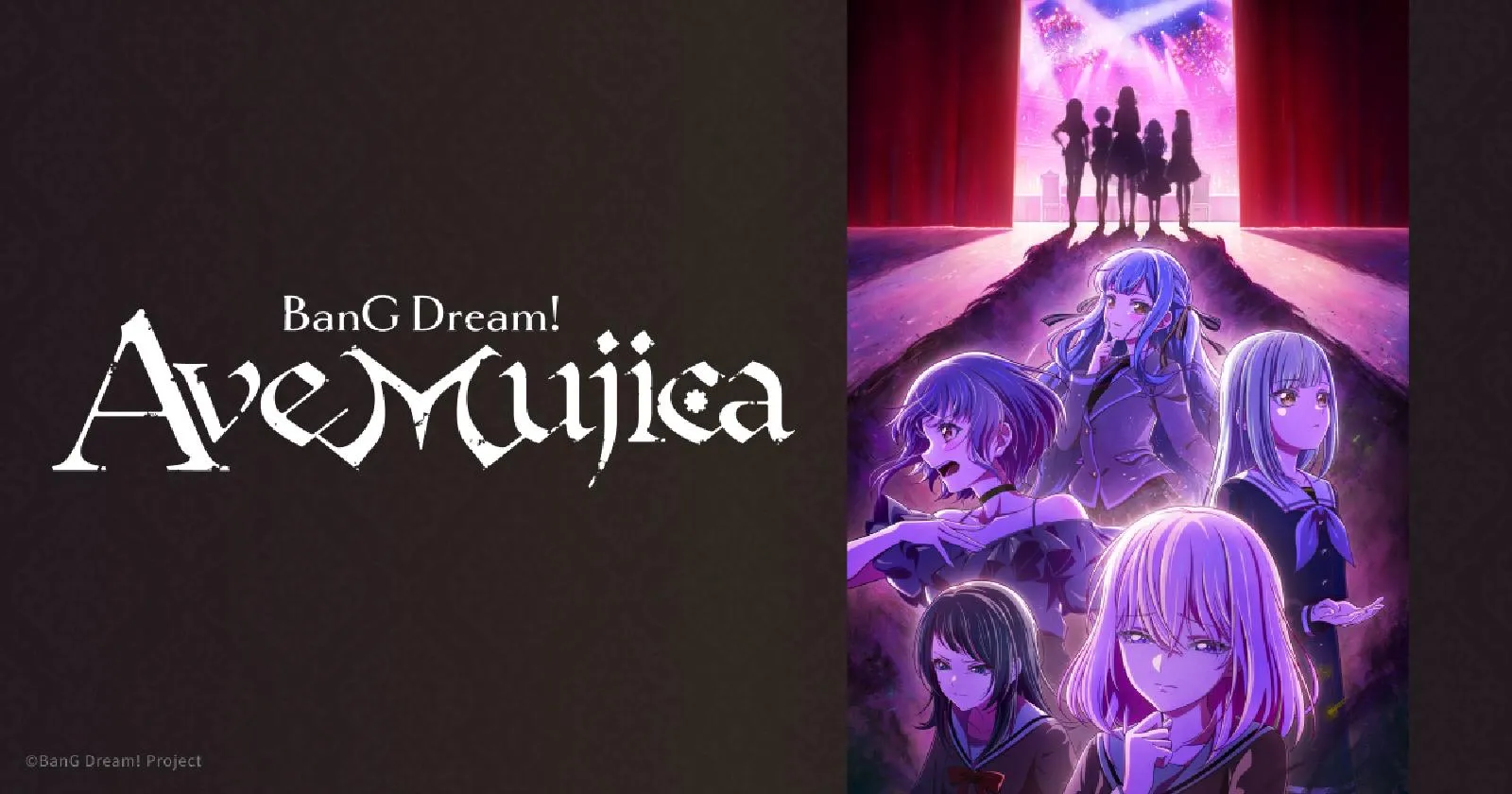
When I heard there was going to be an Ave Mujica anime, I wasn’t sure what to expect. It’s part of the BanG Dream universe, but it doesn’t follow the usual upbeat path. This one leans into a gothic metal tone with characters who wear emotional armor and try to sound louder than their own fears.
This is a review from someone who watched not just the music, but the people behind it. The show is as much about psychology as it is about guitar riffs and set pieces.
What Ave Mujica Actually Is
Ave Mujica isn’t just another band in the franchise. They’re a strange mix of masked performance and emotional unraveling.
Sakiko, known on stage as Oblivionis, forms the band after her old group CRYCHIC collapses. She brings in four other girls, each with their own contradictions, and asks them to become something greater than themselves. And heavier.
Instead of typical band anime energy, their sound goes for gothic symphonic metal. Dramatic. Brooding. Their whole style feels like a metaphor for how every member carries some version of a cracked identity.
Getting to Know the Characters
The thing that surprised me most is how much the show cares about who these characters are. It doesn’t rely on tropes. It slows down and lets you feel what they’re struggling with.
Sakiko Togawa (Oblivionis)
Sakiko’s story is the one that keeps pulling me back. She watched CRYCHIC fall apart and watched her old friends move forward without her. Starting Ave Mujica almost feels like a shield.
Her stage persona means “to forget,” but the show makes it clear she never really forgets anything. She buries it under control, perfection, and a need to rewrite her own history.
There are scenes where she looks like she’s keeping the entire band together through sheer willpower, even while she’s falling apart inside. It’s hard not to feel for her.
Mutsumi Wakaba (Mortis)
Mutsumi’s story hurts in a very human way. Her relationship with Mortis isn’t a gimmick. It feels like a person trying to survive by splitting off the parts of themselves that can take the hits.
When Mortis appears, it’s not an edgy moment. It’s a cry for help. And the show treats it that way.
Their back and forth makes up the emotional center of the series for me. It’s identity laid bare in the most dramatic and painful way.
Nyamu Yutenji (Amoris)
Nyamu is that chaotic presence you can’t look away from. She’s loud, charming, and unpredictable. She wants attention and isn’t shy about it.
Her persona means “of love,” which fits because she chases affection like it’s her life force. At first she looks like comic relief, but she becomes a foil to Sakiko’s rigid world view.
She forces the band to confront their own strictness. And she makes the group feel alive.
Uika Misumi (Doloris)
Uika holds herself in a way that always looks composed. That calm hides a lot of pressure though.
She has experience in another idol unit, and it gives her a strange duality. Bright idol on one side, dark metal guitarist on the other. She’s always aware of both worlds and you can feel the weight on her.
Umiri Yahata (Timoris)
Umiri is quiet but extremely precise. Everything she does is measured. Her persona means “fear,” and it reflects her perfectionism well.
What I like about her arc is that it never turns her into someone she’s not. She doesn’t suddenly become loose or carefree. She learns how to move forward without erasing the parts of herself that still worry.
Why the Show Works
The gothic visuals aren’t just there for style. They mirror the themes. Masks hide truths we don’t want to face. Personas become shields. Every member of the band is trying to figure out who they are under the makeup and the costumes.
The animation leans into this. Shadowed stages. Sharp highlights. Close-up shots that feel like confessions. The music doesn’t act as background either. It feels like the only language these characters can use to say what they can’t put into words.
Some Flaws, But Nothing Deal-Breaking
The show has a few rough edges.
Some symbolic moments lean a bit too dramatic. A few scenes assume you already know the emotional weight they’re referencing. And this isn’t a gentle entry into music anime. It starts heavy and stays that way.
Even with those flaws, the series never wastes the emotion it builds.
Final Thoughts
For me, Ave Mujica feels like watching people pour themselves onto a stage and trying to make something beautiful out of the mess.
It isn’t just a band story. It’s a story about people trying to pull themselves together, even when they already expect to break again. Somewhere in that chaos, they find moments of harmony.
Rating: ★★★★★ (5/5) Not just for the music, but for how deeply I felt every beat of these characters’ hearts.